The Method

What we mean
when we say sound.

An honest account of the practice, the mechanism beneath it, and the evidence we lean on. Written for the sceptic in the room.
By Kayla Herringer · 8 min read
i.

The problem with the word "healing".

Sound healing carries a credibility tax. The word "healing" does most of the damage. It overpromises in one direction and undersells in the other. What we actually do is far more specific. We use sustained, controlled acoustic environments to nudge the nervous system from a sympathetic state (alert, vigilant, productive) into a parasympathetic state (downshifted, restorative, recoverable). The body has always known how to do this. Modern life simply gives it fewer opportunities to.
ii.

The mechanism, briefly.

Three things move during a session. Cortisol drops, heart-rate variability rises, and vagal tone increases. Each of these is measurable. Each is associated, in the peer-reviewed literature, with better sleep, lower inflammation, more accurate emotional regulation, and recovery from cognitive load. None of this is mystical. It is the body responding to a precisely held environment.

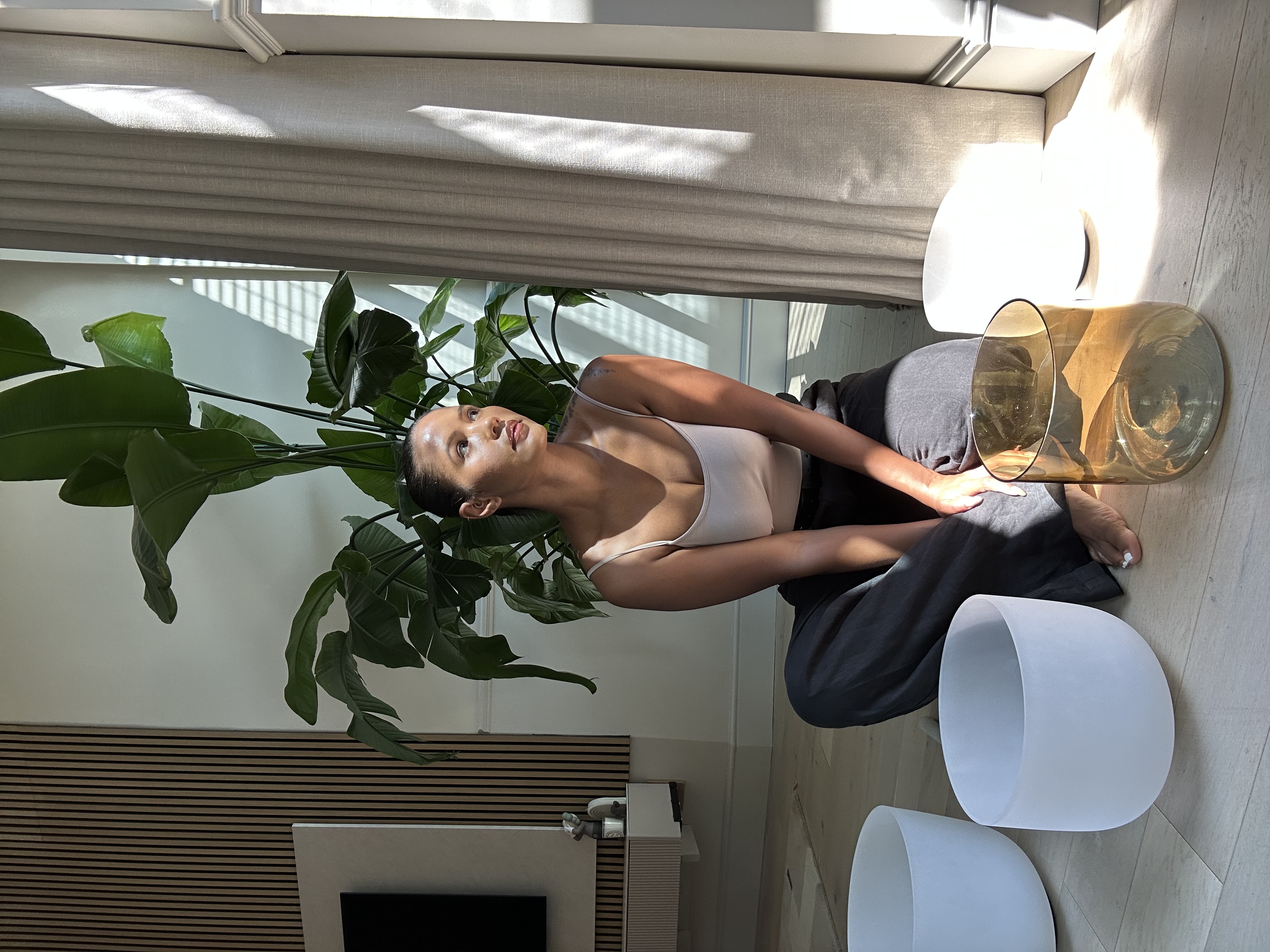
The acoustic instruments (Himalayan bowls, gongs, crystal bowls, chimes) are tools. The skill is in how they are played and, more importantly, in how the room is held.
iii.

Why structure matters.

Every Chime & Flow session follows the same three-movement architecture. The instruments change. The emphasis changes. The structure does not. Naming it is not branding. It is how we keep the practice repeatable, teachable, and serious.
The Chime Method

Three movements.

Each session is built on the same three-part structure. Tested, refined, and the reason no two clients have ever told us our work felt random.
i.

Settle

Arrival. Orientation. The threshold into practice.
ii.

Sound

The immersion. Live, tailored, never recorded.
iii.

Integrate

The return. Audio takeaway. The work continues.
For the avoidance of doubt

What this is, and isn't.

This is

A precise, evidence-informed practice.

A reliable way to downshift the nervous system.

A tool that works alongside therapy, coaching, medical care.

Built for people who don't have time for performance.

Quiet, professional, repeatable.

This isn't

A cure for any medical condition.

A substitute for therapy or psychiatric care.

A spiritual ceremony or belief system.

Energy work, chakra alignment, or aura clearing.

Something we'll ever pretend it is.
Selected literature

What we lean on.

[1]
Goldsby T.L. et al. Effects of singing bowl sound meditation on mood, tension, and well-being. Journal of Evidence-Based Integrative Medicine.
2017
[2]
Trivedi G. et al. Effect of meditation and Himalayan singing bowl on cardiovascular and autonomic measures. Cureus.
2022
[3]
Porges S.W. The Polyvagal Theory: neurophysiological foundations of emotion, attachment, communication, and self-regulation. Norton.
2011
[4]
Stanhope J. & Weinstein P. The current state of the science on the effects of sound on the autonomic nervous system. European Journal of Integrative Medicine.
2020

Kayla Herringer

BAST-certified sound therapist. Based in London. Senior project manager at one of London's largest live venues by day, sound practitioner by practice. Understands the load both halves of the room are carrying.
The practitioner

Credentials in plain language.

Certification

BAST · British Academy of Sound Therapy

Public liability

£5M cover · Westminster Insurance

Compliance

GDPR · DBS-checked

Background

Prior career in corporate. Understands the load.

Continuing study

Polyvagal-informed practice (in progress)

Studio

Central London. Sessions also delivered on-site.