

What Is a Sound Bath? A Beginner's Guide
What Is a Sound Bath? A Beginner's Guide
By Kayla, founder of Chime & Flow
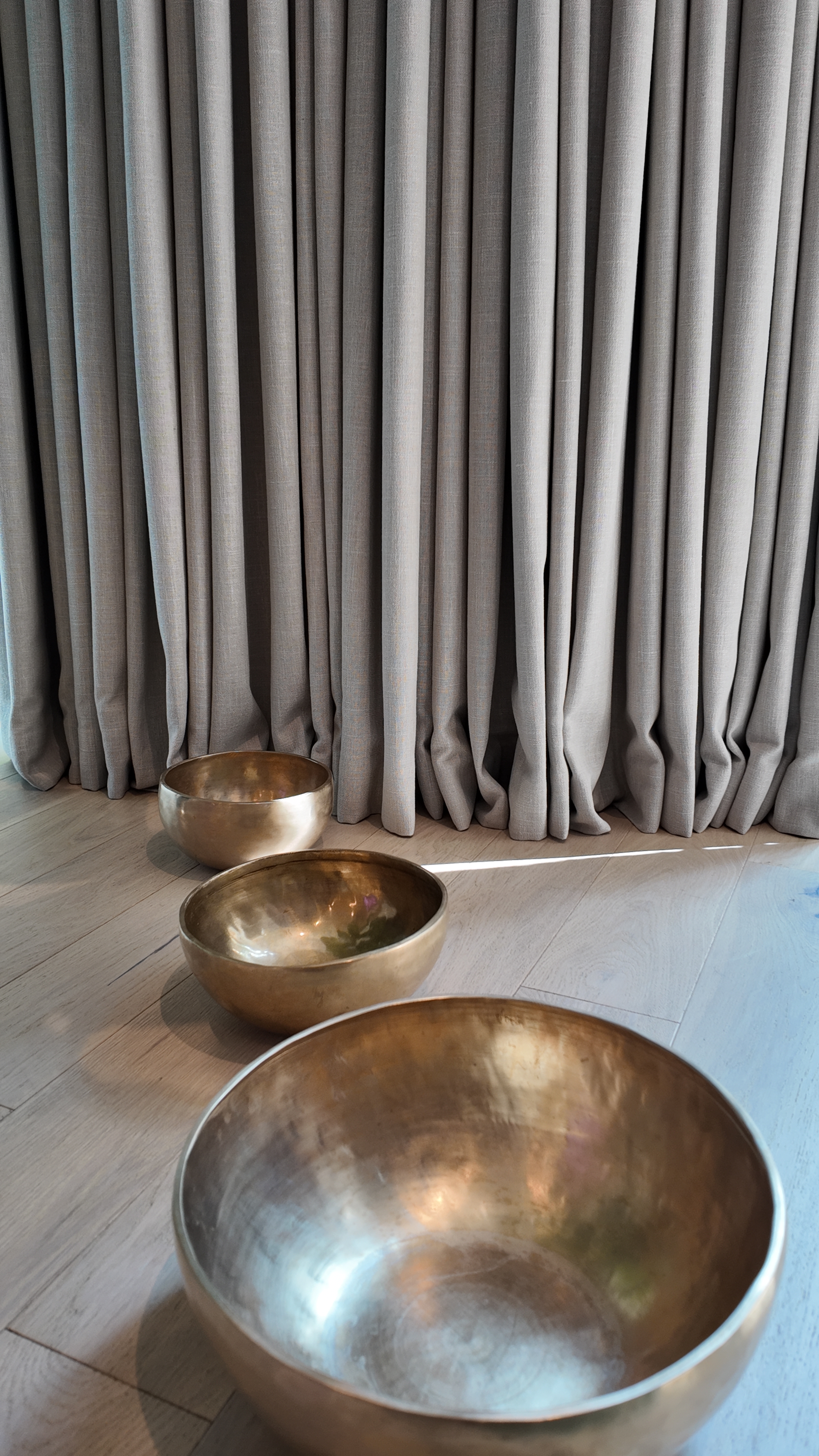
A sound bath is a group session in which live acoustic instruments create a sustained sound environment while you lie down. The instruments most commonly used are Himalayan singing bowls, crystal singing bowls, gongs, and chimes. There is nothing to do, nothing to say, and no technique to learn. The room and the sound do the work.
The name is misleading. You don't get wet. Nothing gets bathed. It's an outdated translation of a practice that predates the marketing.
What actually happens in the room
You arrive to a room with the lights dimmed and mats laid out. You take off your shoes. You lie down. The practitioner offers a brief spoken welcome, then begins to play. For the next 60 to 75 minutes, you rest while sound moves through the space. The instruments are played live and read the room in real time. You are not expected to meditate, focus, or do anything with your mind. The nervous system responds regardless.
At the end, the practitioner brings the sound down deliberately, invites you back, and the session ends.
What you feel
Most people report feeling significantly calmer within the hour. Many fall asleep or drift close to it. Some cry without knowing why. Some feel nothing dramatic in the room and then sleep unusually well that night. Any of these is a normal response. There is no correct experience.
Why it works
Sustained sound at particular frequencies encourages the nervous system to move from a sympathetic state (alert, vigilant) into a parasympathetic state (restorative). Research shows measurable reductions in salivary cortisol and improvements in heart-rate variability after a session. The mechanism is physiological, not mystical.
Who it's for
Sound baths work particularly well for people whose minds don't quiet easily. If you have tried meditation and struggled with the internal monologue, this is a low-effort alternative that produces similar nervous-system outcomes without requiring you to control your attention.
What to bring
Nothing. A good practitioner brings mats, blankets, and everything else. Wear comfortable clothes you can lie down in for an hour. Skip caffeine in the two hours before.
What to expect afterwards
Give yourself twenty minutes before doing anything cognitively demanding. Some people drive home immediately, but most benefit from a slower re-entry to the day. Hydrate. Notice how you sleep that night.
Kayla is the founder of Chime & Flow and a certified sound therapy practitioner with the British Academy of Sound Therapy (BAST). She has been practising sound healing for two years and hosts group immersions, private ceremonies, and corporate wellness sessions across London.



.png)
